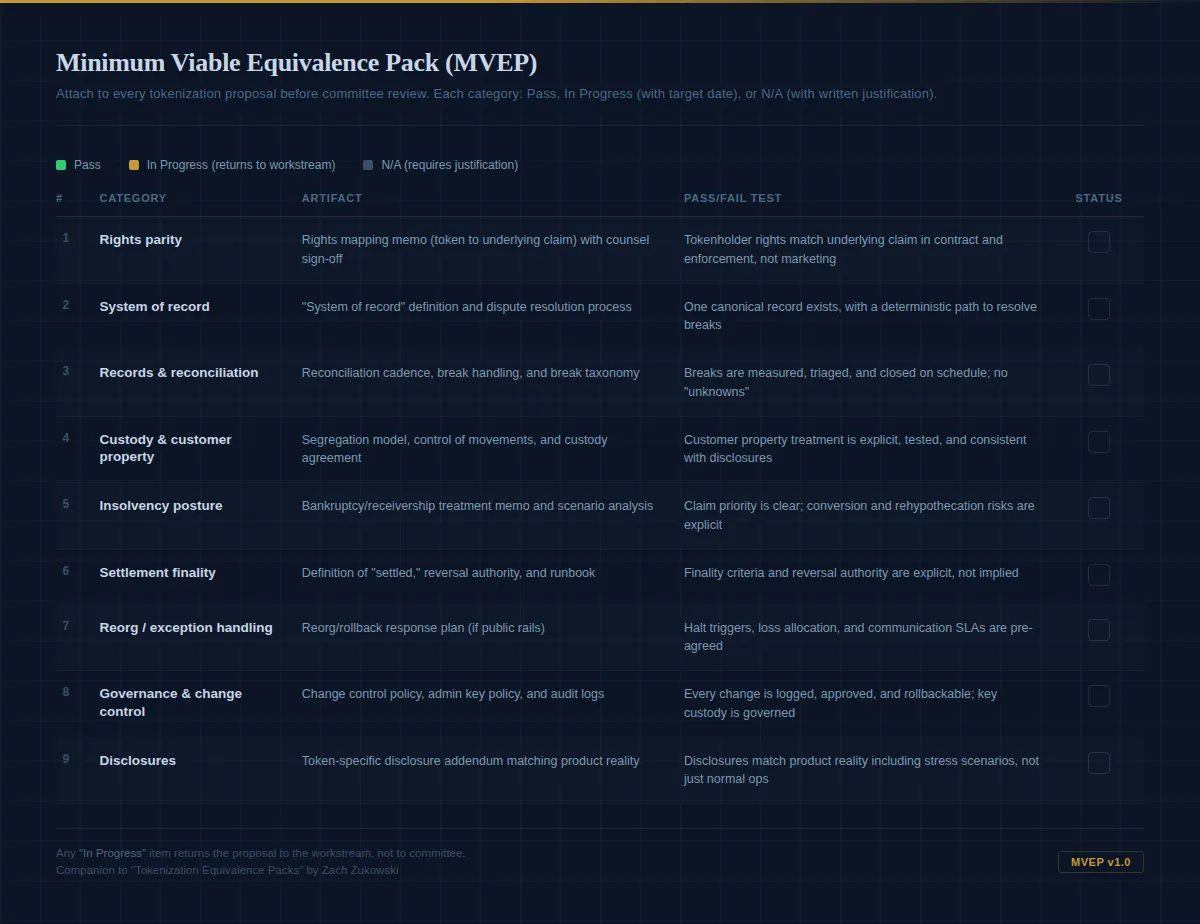
MVEP as the entry gate
Legal, operational, and economic equivalence at approval, with named artifacts and pass/fail tests aligned to how risk committees actually challenge digital-asset products. The nine diligence categories are: rights parity, system of record, records and reconciliation, custody and customer property, insolvency posture, settlement finality, reorg and exception handling, governance and change control, and disclosures. Typical artifacts include rights-mapping opinions, reconciliation SLAs, custody agreements with insolvency language, and governance audit logs showing the policy has been followed.
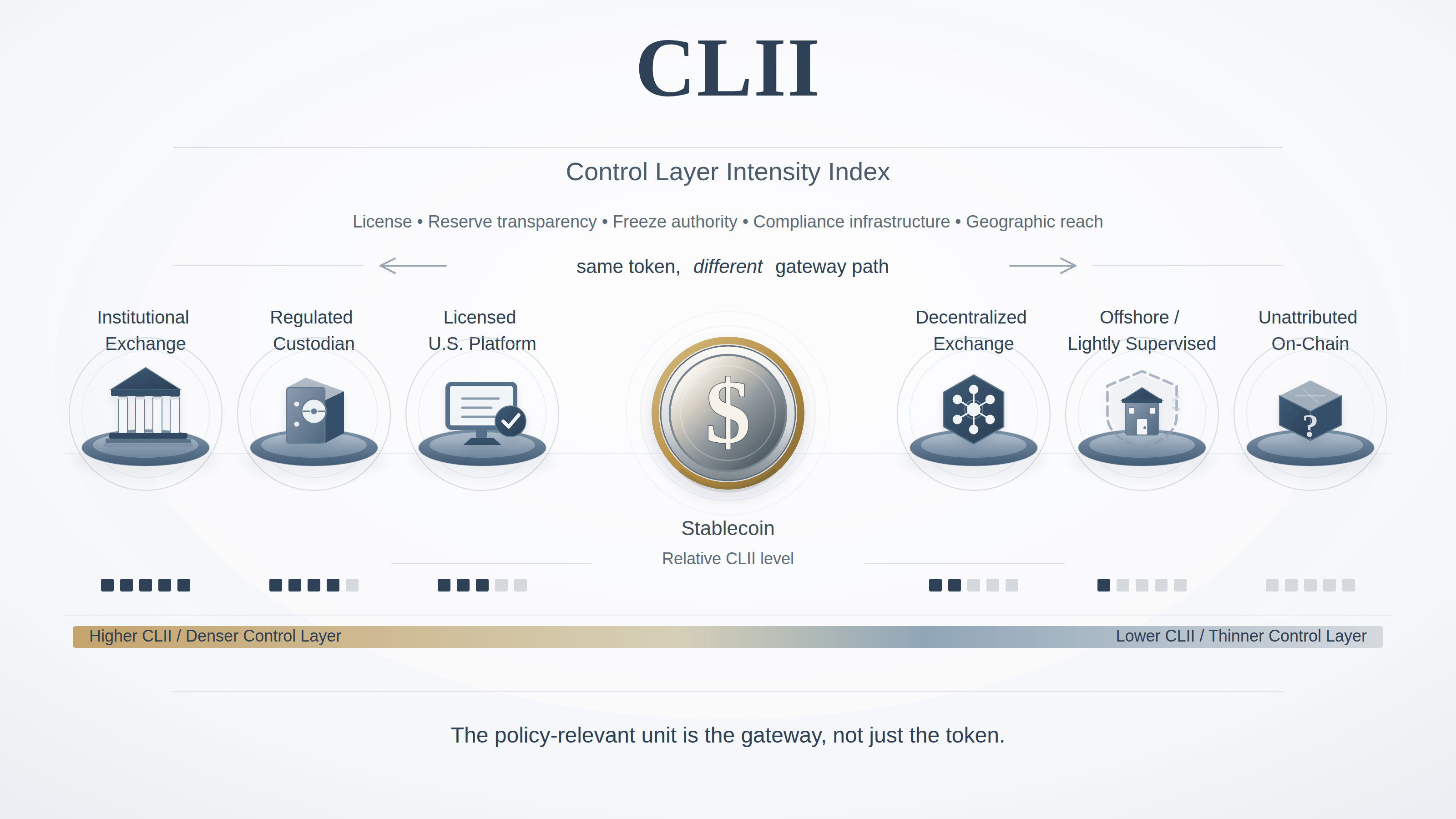
CLII as the drift detector
The CLII classifies compliance posture at the gateway layer (custody segregation, reconciliation integrity, and concentration risk) and is distinct from resilience scoring: Circle and Coinbase had near-identical CLII scores but showed sharply different stress retention during SVB, consistent with entity-specific banking exposure driving outcomes. The CLII extends diligence after approval by tracking deterioration in the control surface and flagging when conditions warrant re-evaluation, conditional continuation, or suspension.
Operational-risk scope
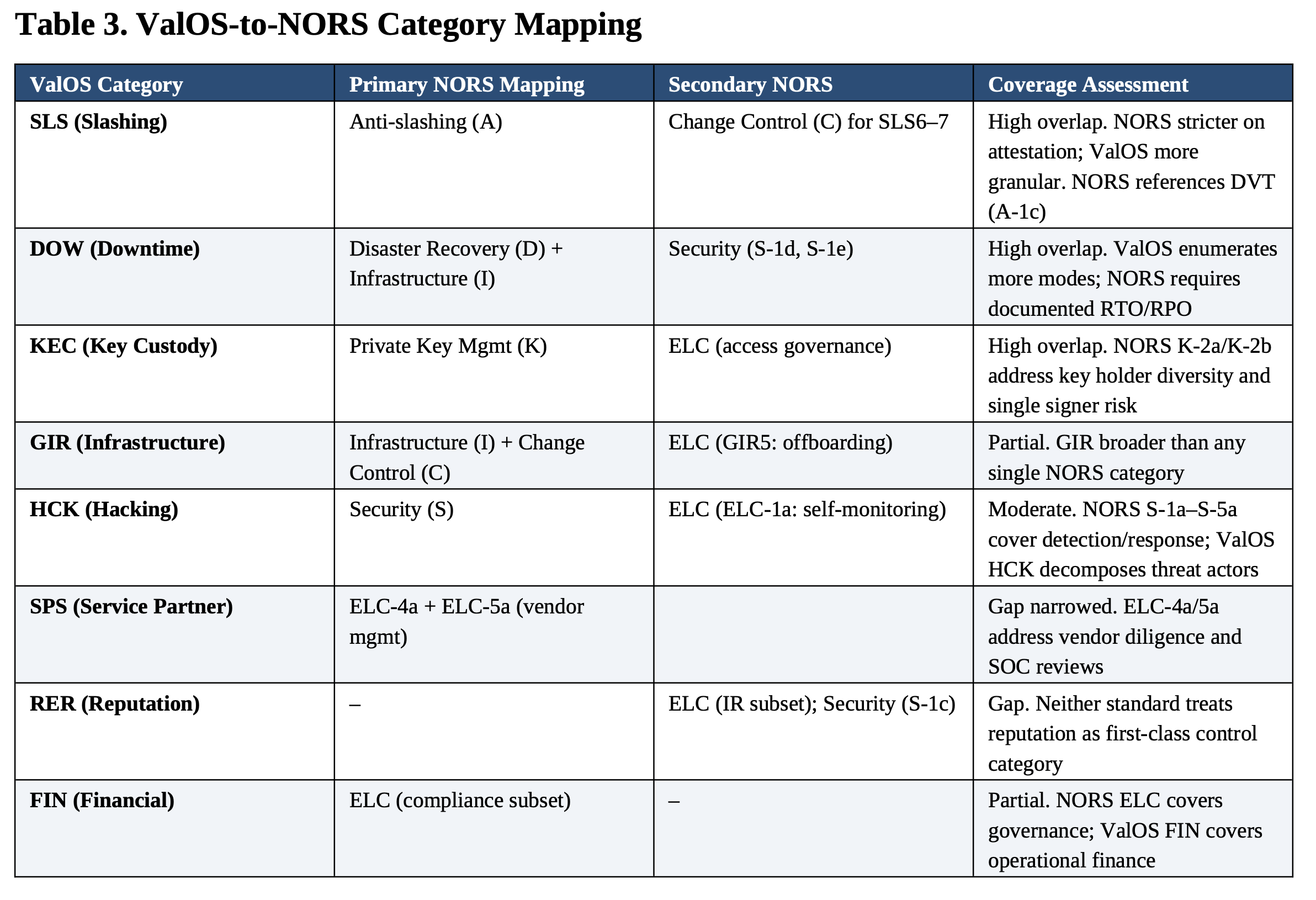
In the current Operational Risk paper, risk is assigned at the infrastructure-group level. Operator-level heterogeneity (whether smaller operators face systematically higher risk) is explicitly future work, not a demonstrated finding.
Do the controls survive contact with real failure modes?
Custody segregation, settlement finality (including value integrity and convertibility, not block confirmation alone), records and reconciliation, and insolvency posture under stress. The MVEP requires named artifacts and pass/fail tests for each: a rights-mapping opinion, a reconciliation SLA, a custody agreement with insolvency language, and a governance audit log showing the policy has been followed. The SVB weekend is the reference case: tier labels, attestation reports, and “institutional grade” designations all failed to surface the infrastructure risk that broke USDC’s peg.
Who owns monitoring after approval?
Approval starts the monitoring cycle. One-time MVEP diligence establishes the entry standard; CLII-based monitoring tracks whether the product continues to maintain its control posture over time. A tier-boundary crossing or dimension-level deterioration triggers re-evaluation, with three possible outcomes: reaffirmation, conditional continuation (with defined remediation timeline), or suspension of new issuance. Counterparties must be notified within 24 hours of initiating review.
What should force a pause or redesign?
Thresholds tied to concentration, routing dependency, and governance outcomes under infrastructure shock. In the Operational Risk simulations, reputation-weighted governance collapsed to an average score of 0.18 on a 5.0 scale by year five when the recovery threshold was set above the operational floor operators could reliably achieve. The fix is specific: lowering the uptime threshold from 0.99 to 0.95 restores a workable reputation floor.